Defective Equipment Tickets in Washington State
Start With the Law Printed on Your Ticket
A defective equipment ticket may allege unsafe equipment, a missing required part, or a specific problem such as a broken light. Compare the officer’s description with the statute or ordinance on the notice. Washington’s general equipment law is RCW 46.37.010.
1. What Is a Defective Equipment Ticket?
Equipment citations concern the condition or operation of the vehicle. The court may need to decide whether the part was required, whether it worked at the time, and whether an exception applies to that vehicle.
General Equipment Rules and Specific Requirements
RCW 46.37.010 addresses unsafe conditions and required equipment. A more specific rule can govern the part at issue. For example, Washington lists separate requirements for headlamps and tail lamps.
Which Law Applies to My Vehicle?
Record the make, model, year, and vehicle type. Requirements can depend on what you were driving or towing and whether the law applies to that particular equipment.
2. What to Check on the Citation
Read the entire notice and keep a copy. Compare the alleged defect and the cited law before deciding whether to pay, request mitigation, or contest.
The Statute or Ordinance Number
The code number is more useful than the shorthand description. Read the section and any subsection on the ticket. Note which part of the vehicle the officer identified.
Details to Verify
- Equipment. Confirm whether the ticket describes a headlamp, tail lamp, signal, or another part.
- Vehicle. Check that the notice identifies the vehicle or trailer involved.
- Time and place. Note any conditions that matter to what the officer could see.
- Evidence. Keep available photos, video, inspection records, and the officer’s description.
- Response. Find the court, how the notice was served, and the response instructions.
Keep Evidence From Before and After a Repair
A dated photo or video can document the condition you observed. Save any diagnostic report or work order that identifies the vehicle, the part, and what the technician found.
3. Common Equipment Issues
Equipment requirements vary by part and vehicle. These examples show what to document if the notice concerns lights or other safety equipment.
Broken Headlights, Tail Lights, or Signals
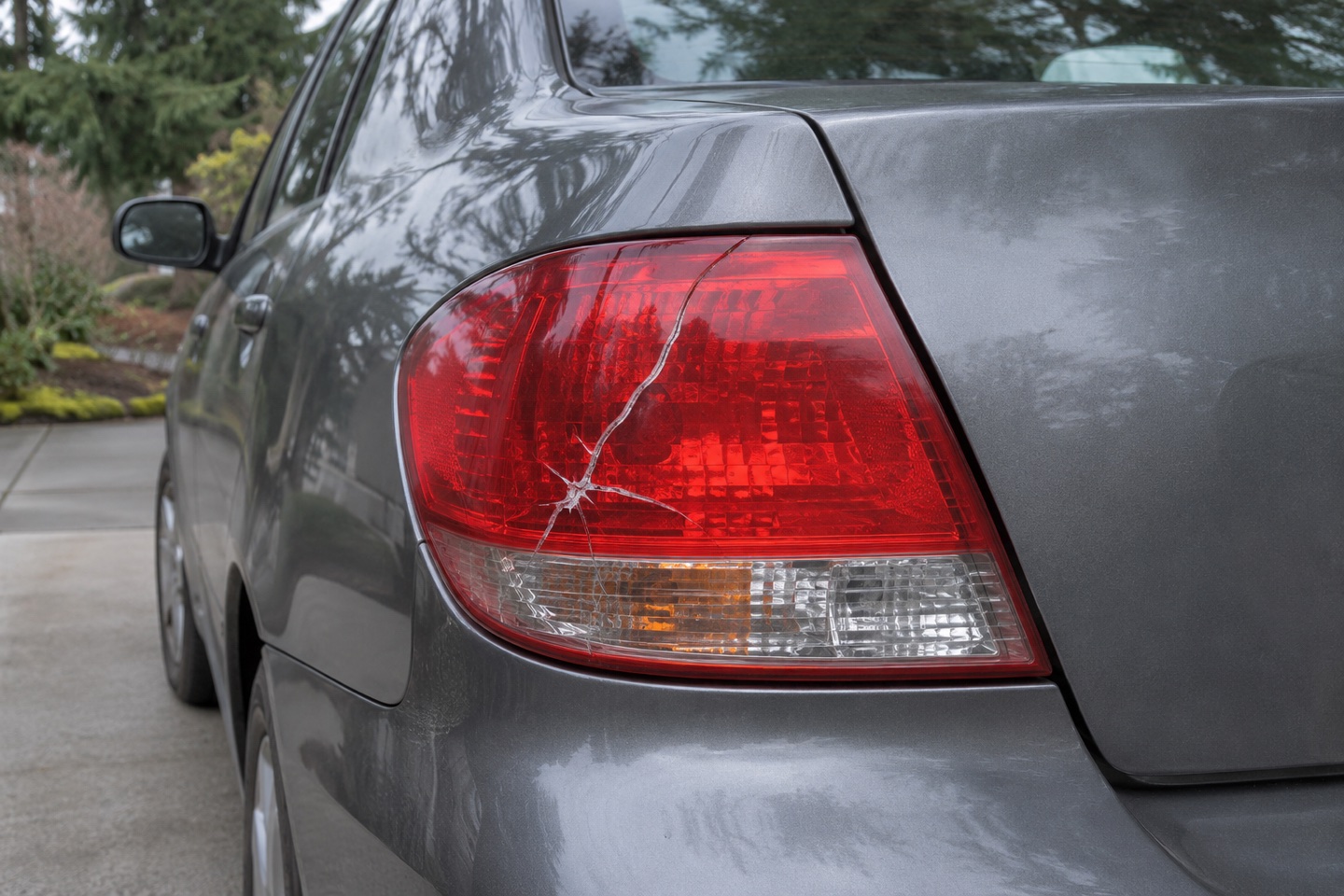
Identify the exact lamp and function in question. The same rear assembly can contain a tail lamp, stop lamp, and turn signal. Record which function was tested or repaired.
Examples of Useful Documentation
- Headlamp. Note which side was cited and whether the issue was a failed lamp or another condition.
- Tail lamp. Keep dated pictures and record whether the light worked when tested.
- Stop lamp. Ask the repair shop to identify the brake light it inspected or replaced.
- Turn signal. Save a diagnostic report if the problem was intermittent.
- Other equipment. Bring any inspection record that names the part and its condition.
Does a Repair Cancel the Ticket?
A repair receipt documents what was fixed and when. The ticket stays pending until it is resolved through the court or issuing authority. Ask the court listed on your notice whether it accepts proof of correction for that citation.
4. Is Defective Equipment a Moving Violation?
WAC 308-104-160 treats equipment violations as nonmoving for the Washington licensing purposes it covers. Check the exact citation and any additional charges from the same stop.
What About My Driving Record?
The nonmoving classification alone does not tell you whether a disposition will be reported or affect your insurance. Check the offense, the court’s disposition, and the record used by the agency or insurer.
What If I Have a CDL?
Tell your lawyer that you hold a CDL and whether you were driving a commercial vehicle. Keep any roadside inspection report along with the court notice. An inspection report and a citation can raise separate issues.
Check the Exact Offense Before You Respond
If you are unsure how the state classifies the ticket, see the Washington moving and nonmoving violations guide and compare it with the law on your notice.
5. How to Respond to a Defective Equipment Ticket
Use the deadline on your notice. Under IRLJ 2.4, a Washington infraction generally requires a response within 30 days of personal service or 33 days from mailing when served by mail.
Contesting the Allegation
A contested hearing asks the court to decide whether the violation occurred. Relevant evidence might address the equipment requirement, the condition of the part, or what the officer observed.
Requesting Mitigation
A mitigation hearing accepts that the infraction occurred and asks the court to consider the circumstances. Check whether the court will accept a repair invoice or other supporting documentation.
6. What to Have Ready for a Ticket Review
Send the complete citation, the response deadline, and any separate court or inspection notices. Keep the original paperwork and a copy of anything you send.
Include the vehicle details, dated photos, and any itemized repair receipt or inspection report. Explain when you first noticed the problem and when the vehicle was checked.
If you want help comparing your options, Ticket Cutter can review the notice and evidence. See our Washington traffic ticket defense page.
Get Help With a Washington Equipment Ticket
If you are unsure what the ticket alleges or which response fits your situation, call Ticket Cutter at (425) 264-2000. Have your citation and any repair records available.
Ask Ticket Cutter to Review Your Citation
About the Author